Fight Fascism: What It Means, Why It Matters & How to Take Action in 2025 | Fix America Merch
Fight Fascism:
What It Means in 2026

Stand Against Fascism — Resist Tee
Bold anti-fascism apparel for people who believe the fight against authoritarianism is everyone's responsibility. 60+ designs and growing.
Shop Resist Fascism CollectionFascism doesn't announce itself. It doesn't arrive with a declaration and a warning. It moves through institutions gradually — normalizing what was once unthinkable, discrediting what was once trusted, and by the time it's undeniable, the mechanisms for fighting it have often already been weakened. Fighting fascism means recognizing it early, naming it clearly, and refusing to normalize it at every stage.
What Is Fascism? A Clear Definition
Fascism is a form of far-right, authoritarian ultranationalism characterized by dictatorial power, forcible suppression of opposition, and rigid regimentation of society and the economy. It emerged as a political movement in the early 20th century, most devastatingly in Mussolini's Italy and Hitler's Germany, but its core features have appeared in various forms across history and across the world.
Political scientist Umberto Eco identified fourteen common features of fascist regimes — including a cult of tradition, rejection of modernism, fear of difference, appeal to a frustrated middle class, and the use of an exhausted vocabulary of empty symbols to replace critical thinking. What connects all of them is the concentration of power and the elimination of checks on that power.
In the United States today, historians and political scientists across the ideological spectrum have raised alarms about the presence of multiple fascist warning signs in our political landscape. Understanding those warning signs is the first step in fighting them.
14 Warning Signs of Fascism — Are You Seeing Them?
- Cult of tradition — appeals to a mythologized past ("Make America Great Again")
- Rejection of modernism — hostility to science, expertise, and critical thought
- Cult of action for action's sake — governance by chaos and perpetual crisis
- Disagreement is treason — political opposition framed as enemy activity
- Fear of difference — scapegoating of immigrants, minorities, and LGBTQ+ people
- Appeal to a frustrated middle class — exploiting economic anxiety for authoritarian ends
- Obsession with a plot — conspiracy theories about internal enemies and "deep state"
- The enemy is both strong and weak — opponents portrayed as existential threats and weaklings
- Pacifism is trafficking with the enemy — opposition to war branded as betrayal
- Contempt for the weak — cruelty to vulnerable people normalized and celebrated
- Selective populism — "the people" defined narrowly to exclude minorities
- Newspeak — impoverished vocabulary designed to limit critical thinking
- Attacks on the press — media framed as "enemy of the people"
- Undermining elections and courts — democratic institutions treated as obstacles
The History of Fighting Fascism
The anti-fascist movement is as old as fascism itself. When Mussolini's Blackshirts began terrorizing Italian workers in the early 1920s, workers' movements and democratic activists organized to resist them. When Hitler rose to power in Germany in 1933, millions of ordinary people faced a choice: comply, collaborate, or resist. Those who resisted — at enormous personal risk — are the people history remembers with honor.
Every Allied soldier who fought in World War II was, by definition, fighting fascism. The Greatest Generation didn't fight to protect fascism — they fought to destroy it. Every anti-fascist today stands in that same tradition, updated for the specific forms fascism takes in the 21st century.
That history is part of why our Resist Fascism collection exists. The shirts we make connect their wearers to a tradition of resistance that is fundamentally American — and fundamentally human.
What Does Fascism Look Like in 2026?
In 2026, the markers of fascism in the United States are not subtle. They include: the use of federal agencies to punish political opponents, mass deportation of immigrants without due process, attacks on the independence of the judiciary, the dismantling of civil service protections, the intimidation of universities and cultural institutions, and the systematic targeting of LGBTQ+ people, Black Americans, and immigrant communities.
These are not policy disagreements. They are structural attacks on the foundations of democratic governance. And they are happening with remarkable speed. Fighting fascism in this moment means being clear-eyed about what we're looking at — and refusing the comfortable narrative that it can't happen here.
Our No Kings in America collection and our anti-Trump shirts are built for exactly this moment — for people who are naming what they see and refusing to look away.
How to Fight Fascism: Practical Actions
Show up physically. Protest works. The history of social movements — from the suffrage movement to the civil rights movement to the movement against the Vietnam War — shows that sustained, visible public opposition changes what is politically possible. Wear your resist fascism apparel to every march, rally, and community meeting.
Protect vulnerable communities. Fascism's first targets are always the most vulnerable — immigrants, religious minorities, LGBTQ+ people, people of color. Fighting fascism means concretely protecting those communities: showing up for them, donating to their legal defense funds, and making sure they know they are not alone. Our Abolish ICE collection and CHINGA Tu MAGA apparel exist in solidarity with those communities.
Support independent institutions. Fascism weakens by attacking independent journalism, universities, courts, and civil society organizations. Counter that by subscribing to independent journalism, donating to civil liberties organizations, and voting in every election at every level.
Make your opposition visible. Wearing a fight fascism shirt, displaying your values publicly, and refusing to treat authoritarianism as normal are all meaningful acts. Visibility matters. When people see that opposition is widespread, it gives others the courage to speak up too.
Anti-Fascist Apparel: Wearing Your Resistance
Protest apparel has been part of anti-fascist resistance since the 1930s. What you wear to a march, to work, to the grocery store is a public declaration — a small but real act of refusing to normalize what is happening. An anti-fascist shirt tells every person who sees it: this person sees it too. This person is not going along with it.
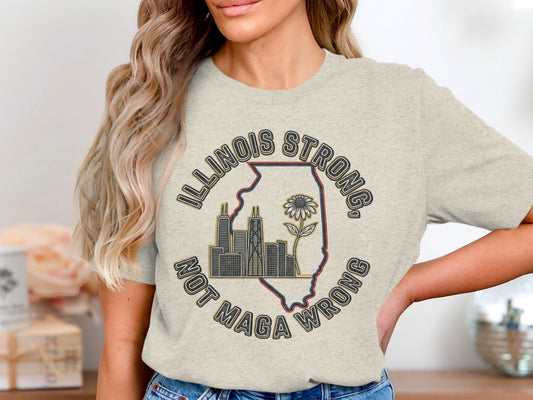
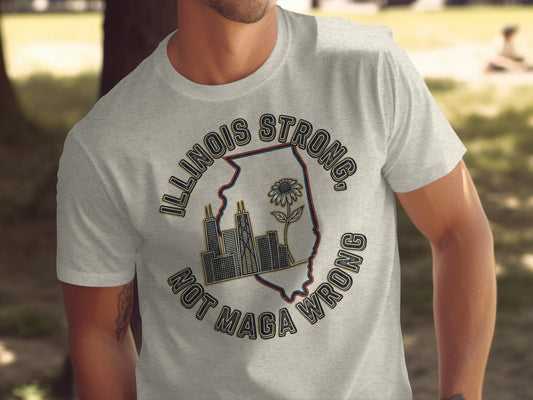
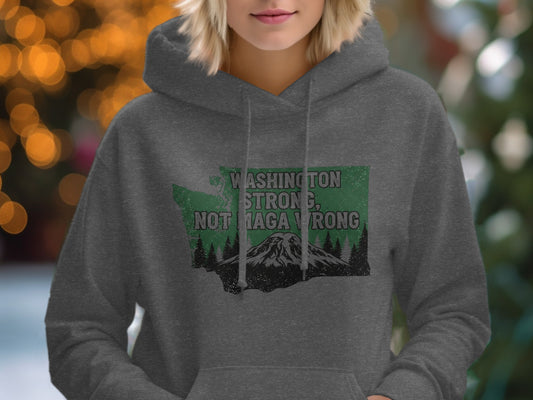
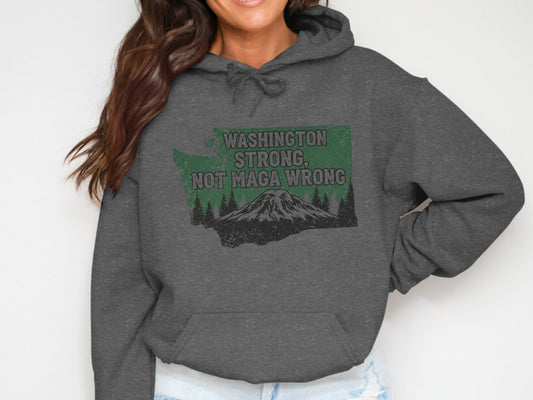
At Fix America Merch, our Resist Fascism collection is one of our most extensive — 60+ designs built for people who are done being quiet about it. We also carry No Kings in America tees, Anti-MAGA hoodies, political hats, and our full range of protest apparel for people who believe the fight against fascism is everyone's responsibility.
Explore our Latin Merch collection for anti-fascism apparel centered on Latino community resistance, and our Humanity First collection for shirts that ground the fight against fascism in universal human rights.
The Language of Anti-Fascism: Smash Fascism, No Fascism, Fight Back
The language of anti-fascism is intentionally unambiguous. Smash fascism. No fascism. Fight back. Resist. These phrases reject the both-sidesing and false equivalence that allows fascism to advance by making its opposition seem extreme. They call the thing by its name and refuse to soften it.
That directness is also why phrases like chinga la migra resonate so powerfully in communities directly targeted by fascist policy. The language matches the stakes. When the policy is family separation and deportation raids, polite language is a luxury that targets of that policy cannot afford.
Frequently Asked Questions
What does it mean to fight fascism?
Fighting fascism means actively opposing authoritarian, nationalist, and anti-democratic movements that seek to concentrate power, suppress dissent, scapegoat minorities, and dismantle democratic institutions. It includes protest, organizing, political engagement, education, and making your opposition visible in public life.
What is anti-fascism?
Anti-fascism is the political stance and movement dedicated to opposing fascism in all its forms. It has a history dating to the 1920s and 1930s when fascist movements first rose to power in Europe. Today it encompasses a broad range of activists, organizations, and everyday citizens committed to defending democratic values and human rights.
What are the warning signs of fascism?
Political scientists identify multiple warning signs: scapegoating of minorities, attacks on the free press, undermining of courts, cult of personality around a leader, use of state power against political opponents, erosion of democratic norms, and normalization of political violence. See our full list above.
Is wearing an anti-fascist shirt legal?
Yes. In the United States, wearing a shirt expressing anti-fascist views is constitutionally protected political expression under the First Amendment. Political speech — even provocative political speech — cannot be suppressed by the government.
Where can I buy fight fascism shirts?
Fix America Merch carries a full collection of resist fascism and anti-fascism apparel. Browse our Resist Fascism collection for bold, high-quality anti-fascism shirts, hoodies, and more. Free shipping on orders over $49.
What is the history of the anti-fascist movement?
The anti-fascist movement traces its roots to the 1920s and 1930s, when workers' movements and democratic activists organized against the rise of Mussolini and Hitler. Every Allied soldier in World War II was fighting fascism. The tradition has continued through every generation that has faced authoritarian threats to democracy — including today.